Amblyopia (Lazy Eye)
Amblyopia, also known as lazy eye, is a development disorder in which one eye has poor central vision and the other eye has normal central vision. It begins in early childhood, and if detected early, vision problems may be reduced.
The most common cause of amblyopia is a condition called strabismus in which the eyes are misaligned. The misaligned eye “turns off” to avoid double vision, and the child uses only the better eye. Another common cause is uncorrected refractive errors, where one eye is out of focus because it is more nearsighted, farsighted, or astigmatic than the other. The blurred eye essentially “turns off.”
Early diagnosis and treatment of amblyopia is critical to prevent vision loss. The earlier the treatment is started, the better the prognosis. The best time to correct amblyopia is during infancy or early childhood. If diagnosed later, treatment may take longer and be less effective.
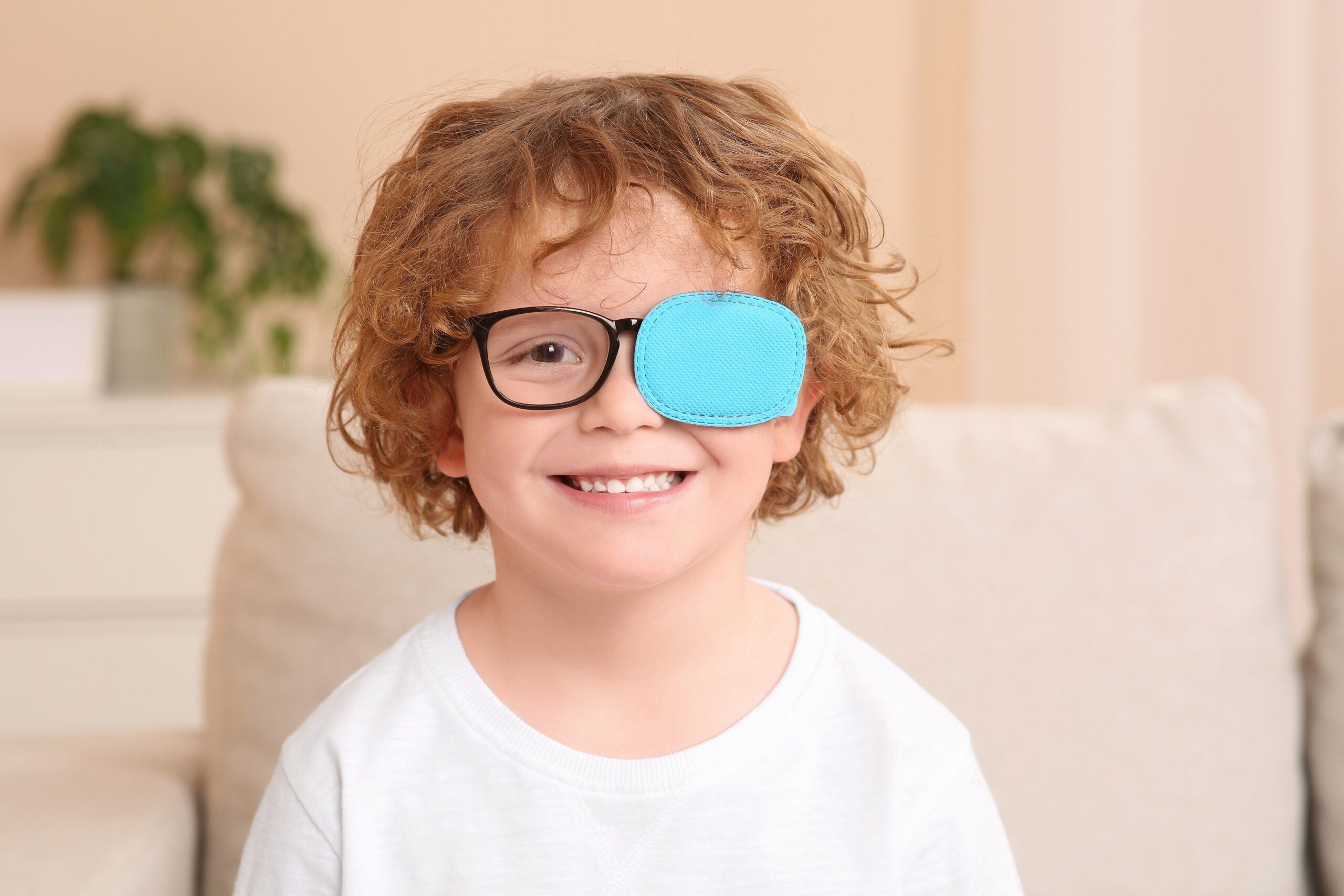
Depending on the cause of amblyopia, treatment options may vary. Potential treatments include prescription glasses or contact lenses to correct refractive errors, patching the eye, and vision therapy. Patching the eye involves covering the good eye to force the child to use and strengthen the amblyopic eye. Left untreated, an amblyopic eye may never develop good vision and may even become functionally blind.